
Azar: Video Chat, Meet Friends
Hyperconnect LLCCommunication
3.819.19K Reviews
- Version
- Varies With Device
- Installs
- 100.00M
- Age Rating
- Mature 17+
Screenshots


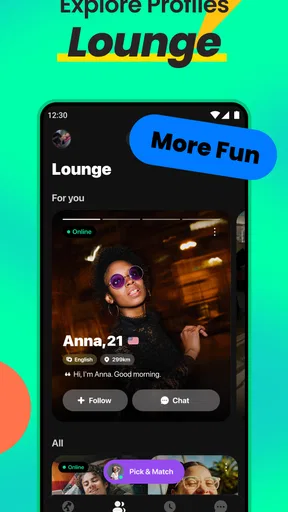

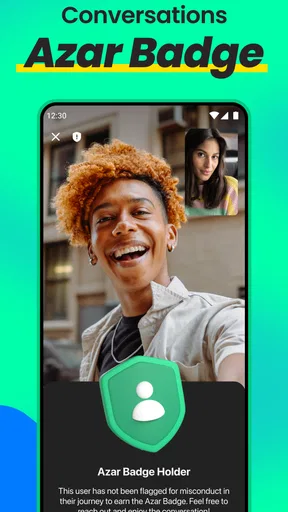


Our Review of Azar: Video Chat, Meet Friends
 Analysis by Appyee
I approached Azar: Video Chat, Meet Friends as a communication app rather than a conventional social network. Its appeal is immediate: instead of building a carefully edited profile and waiting for someone to respond, you can move into live video conversations with people you may never have encountered otherwise. That makes it feel more spontaneous than ordinary messaging, but also less predictable.
Developed by Hyperconnect LLC, Azar sits in the communication category and is free to install, with optional in-app purchases ranging from $0.49 to $399.99 per item. It carries a Mature 17+ age rating, which is an important part of the decision rather than a minor store detail. Live interaction with strangers requires more awareness than browsing posts or chatting with people already in your contacts.
My overall view is that Azar works best for adults who genuinely want quick, face-to-face conversations and are comfortable with the boundaries that come with meeting unknown people online. It is less suitable if you want a quiet messaging tool, a tightly controlled community, or a predictable way to find long-term friends.
How I Would Decide Whether Azar Fits
I would decide whether Azar fits by asking what I want from a conversation before I open it: discovery, not dependable contact with someone I already know. That distinction matters because the same live format that makes an unexpected exchange feel immediate also makes the experience harder to steer. With that in mind, it is easier to see where Azar has a genuine advantage over familiar options.
Start with the kind of connection you actually want
The first question is not whether video chat sounds interesting. It is whether you want the uncertainty that comes with it. Azar is built around meeting and talking, so the experience makes most sense when you are willing to accept conversations that may be brief, awkward, surprisingly enjoyable, or simply not a good match.
If your goal is to call family, coordinate with colleagues, or speak with people you already know, a familiar messenger or dedicated video-calling service will usually be the better choice. Those tools are designed around known contacts and dependable communication. Azar is aimed at discovery, which changes the entire rhythm of use.
I would also consider how comfortable you are being visible on camera. Text-first apps give you time to think, edit, and decide how much of yourself to reveal. A live video format removes much of that distance. That can make a good conversation feel more human, but it can also make an uncomfortable interaction harder to manage calmly.
Think about privacy before the first conversation
For me, the most important preparation is deciding in advance what I will and will not share. I would avoid showing identifiable documents, workplace details, a home address, travel plans, financial information, or anything visible in the background that I would not want a stranger to know. This is not a criticism unique to Azar; it is the basic trade-off of live video with unfamiliar people.
A useful habit is to choose a neutral setting before opening the app. A plain wall and controlled lighting make it easier to keep the conversation focused and reduce accidental clues about where you live. I would also keep the phone positioned so that ending a conversation does not require searching through menus while the other person is still on screen.
The Mature 17+ rating should guide expectations. Adults may still encounter conversations that feel uncomfortable or inappropriate, and younger users should not treat the age label as a suggestion. I would not recommend using the app casually around children or allowing a minor to explore it without close, responsible supervision.
Understand the money model before spending
Azar is free to use in the sense that you can install it without paying, but optional purchases are part of the experience. The available items span from $0.49 to $399.99, so I would not begin by tapping through every paid option just to see what it does. The wide range makes it especially important to understand an item and its price before confirming a purchase.
My practical advice is to decide on a personal spending limit before using the app. If you are enjoying a fast-moving conversation, it is easy to make an impulsive purchase because the interaction feels immediate. That emotional timing is exactly when I would slow down, read the confirmation screen, and ask whether the purchase improves the experience enough to justify it.
Someone looking for a completely cost-free communication routine may prefer a service where both people are already known and ordinary calls do not involve discovery-oriented purchases. Azar can still be useful without treating every feature as something to buy, but users should enter with realistic expectations about optional spending.
What the large audience tells me—and what it does not
Azar has passed 100 million installs, carries an average rating of 3.8 from around 2 million ratings, and has about 19,000 written reviews. Those figures suggest that the app has broad reach and that many people have tried the format. They also tell me that the experience is not universally smooth or universally appealing.
A large audience can be helpful because a discovery-based service needs enough activity to keep conversations moving. At the same time, popularity does not guarantee that every match will be respectful, interesting, or compatible with your expectations. I would treat the numbers as evidence that Azar is established, not as a promise that it will suit every personality.
Where Azar Works Better Than the Usual Choices
The key comparison is not that Azar replaces messaging, but that it brings people into a live exchange sooner than profile-led or text-first services typically do. I find that useful when the point is to test conversational chemistry in real time, rather than build a long chat before deciding whether it feels natural. That strength has limits, though, and the next section considers when a different kind of service better matches the goal.
It removes the waiting period of ordinary social apps
The clearest strength is immediacy. On a conventional social platform, I might spend time creating a profile, browsing posts, sending messages, and waiting for a reply. Azar moves the central activity closer to the front: meeting someone and talking live. For a person who finds prolonged online small talk tiring, that can be a real advantage.
This format also reveals things that text hides. Tone, pauses, facial expressions, and conversational energy become part of the decision about whether I want to continue. A short video exchange can tell me more about whether a conversation feels natural than a long sequence of carefully written messages.
It suits curiosity better than contact management
Azar is more interesting when my purpose is to encounter perspectives outside my usual circle. I can imagine using it after moving to a new city, during a period when I want more social variety, or when I am simply curious about how easily a conversation can begin with someone unfamiliar.
That is different from a contact-based messenger, where the value comes from reliability and existing relationships. It is also different from a profile-heavy dating service, where the main activity is often judging compatibility from photos and written information before speaking. Azar puts more weight on the live exchange itself.
A realistic everyday use case
Imagine finishing a routine evening with half an hour available and wanting human interaction without arranging a call in advance. I would set up in a private room, remove anything identifying from the camera view, and open Azar with a simple goal: have a few respectful conversations, not force a friendship or disclose personal details.
If the first interaction feels uncomfortable, I would leave rather than trying to rescue it. If another conversation is pleasant, I would keep the discussion light at first—interests, everyday routines, general places, or hobbies—while watching whether the other person respects ordinary boundaries. The value of the session would come from the quality of those moments, not from how long I stayed connected.
This is where the app can feel more alive than a standard messaging inbox. There is less preparation and more presence. The trade-off is that I cannot control the experience as tightly as I can when I choose every contact beforehand.
Three habits that make the experience more manageable
- Use a short opening routine. I would begin with a neutral greeting and one easy question rather than immediately sharing personal information. This gives me a quick sense of whether the other person can hold a normal conversation.
- Leave at the first clear boundary problem. I would not debate with someone who becomes insulting, pressures me, or turns the conversation in an unwanted direction. Ending early is more useful than trying to explain myself to a stranger.
- Separate curiosity from trust. A pleasant live conversation can create a feeling of familiarity very quickly. I would still treat the person as unknown until trust has been earned over time and through consistent behavior.
These habits sound simple, but they address a specific weakness of spontaneous video platforms: the speed that makes them engaging also reduces the time available to think. A small amount of preparation gives me more control without defeating the point of using Azar.
The developer and the app’s history add context
Hyperconnect LLC released Azar on October 28, 2013. That long presence helps explain why the service has reached such a substantial install base. I would see it as a mature concept rather than a brand-new experiment, although an established app can still evolve in ways that change how comfortable or useful it feels from one period to another.
The store summary describes the basic idea as meeting and talking to people, and that description is accurate without being enough to make the decision for you. The important question is whether live discovery is worth the uncertainty compared with the control offered by more familiar communication tools.
When Another Category May Be a Better Fit
A different category is often the wiser choice when I need a known audience, a written trail, or more time to decide what I want to say. Those needs are not flaws in Azar; they simply sit outside the app’s discovery-first purpose. Thinking clearly about the kind of interaction I need also helps me judge whether trying it is a low-effort experiment or a change that will take more attention to manage.
Choose a normal messenger for people you already know
If I need dependable contact with friends, relatives, or coworkers, I would choose a conventional messenger or a dedicated calling app instead. The usual alternatives are better when I already know who I want to reach, need a conversation to happen at a planned time, or want a clear record of an ongoing exchange.
Azar adds value through discovery, not through replacing a phonebook. Using it for a family call would introduce unnecessary uncertainty, while using a contact-based service for that purpose would be simpler and more predictable.
Choose a text-first community if camera pressure is a problem
Some people think more clearly in writing, need time to translate, or simply do not want their face on screen. For them, a text-first community may be a better match. Written conversation also makes it easier to scan a profile, pause before responding, and leave without the immediate social pressure of a live exchange.
I would especially steer toward text-based alternatives if a person is new to online social spaces and has not yet developed a comfortable way to handle unwanted attention. Azar can be approachable, but its immediacy is not automatically beginner-friendly.
Choose a structured dating service when your goal is deliberate compatibility
If the main objective is dating, a service built around detailed profiles, stated preferences, and slower matching may offer a more suitable process. Azar can create a spontaneous conversation, but spontaneity is not the same as compatibility. A live first impression can be useful, yet it does not replace learning whether someone shares your values, expectations, or relationship goals.
That distinction matters because users may interpret a friendly video exchange differently. I would not assume that a person who is entertaining or attentive during one conversation wants the same kind of connection that I do.
Choose a closed group for privacy-sensitive conversations
For work discussions, private support groups, or conversations involving sensitive personal matters, I would use a closed service with clearly selected participants. Azar’s central appeal is meeting unfamiliar people, so it is not the environment I would choose for information that needs a carefully controlled audience.
This is also why I would avoid treating the app as a substitute for professional advice or emergency communication. Its strength is casual human contact, not guaranteed access to a particular person or specialist.
The Cost of Switching Into and Away From Azar
Switching into Azar is easy to try because installation is free, but staying comfortable depends on setting boundaries around time, privacy, and optional spending. I would treat the first sessions as a test of whether live stranger-to-stranger conversation suits me, rather than assuming a good moment guarantees a lasting connection. That makes the decision to keep using it—or return to familiar tools—more deliberate.
What you gain by trying it
The entry barrier is low because the app is free to install. Trying it can quickly answer a question that a store page cannot: do I enjoy live, unexpected conversations enough to return? If the answer is yes, Azar may become a distinctive part of my social routine rather than just another messaging icon.
The possible benefit is not limited to making a lasting friend. A short exchange can still be worthwhile if it breaks a repetitive evening, gives me practice speaking with unfamiliar people, or exposes me to a different conversational style. I would judge success by whether the interaction feels meaningful or enjoyable, not only by whether it produces a permanent connection.
What you give up
The main cost is attention. Spontaneous video can encourage me to keep going because the next conversation might be better than the last. Without a stopping rule, a quick experiment can become a longer session that leaves me drained rather than connected.
There is also a social cost to repeated low-quality interactions. Even when I do not spend money, I may spend patience dealing with interruptions, mismatched expectations, or people who do not respect boundaries. That is why I would use Azar in defined sessions instead of opening it automatically whenever I feel bored.
How I would handle purchases and account habits
I would begin with the free experience and observe what I can comfortably do without spending. If an optional item appears useful, I would check its exact price and purpose before confirming it, particularly because the purchase range is so broad. I would never treat a paid item as a way to guarantee a better conversation; the other person’s behavior and compatibility remain outside my control.
I would also keep my profile and conversations intentional. I would not upload or share anything that I might later regret, and I would avoid moving quickly from a casual exchange to private contact details. The fastest way to reduce the cost of leaving a social app is to avoid building an unnecessarily complicated personal presence inside it.
Questions I would answer before recommending it
Is Azar free? You can install it for free, but optional in-app purchases are available. I would use the free starting point to decide whether the format suits me before considering any paid item.
Is it appropriate for children? No. The app is rated Mature 17+, and the live nature of conversations makes age awareness especially important. I would not recommend it for minors.
Can it replace ordinary video calling? Not in the situations I care about most. It is designed around meeting unfamiliar people, while ordinary calling tools are better for reliable conversations with selected contacts.
Is it a good way to make close friends? It can create opportunities for connection, but I would treat friendship as a possibility rather than an expected result. The first conversation is only an introduction, not proof of trust.
Should everyone try it? No. People who dislike being on camera, need strict control over who can contact them, or want a purely text-based experience will probably be happier elsewhere.
My Recommendation
I recommend Azar to adults who are curious, socially flexible, and comfortable making quick decisions about boundaries. It has a clear identity: live discovery rather than routine messaging. The combination of a free starting point, a large audience, and an established developer makes it easy to test whether that identity matches your habits.
I would recommend starting slowly. Use a private, neutral setting, keep early conversations general, decide on a time limit, and do not spend money until you understand how the experience works for you. If a conversation becomes disrespectful, end it immediately instead of treating endurance as politeness.
I would skip it if my priority were predictable contact, deep privacy, or carefully filtered compatibility. In those cases, a normal messenger, a text-first community, a closed group, or a structured dating service would be more appropriate. Azar is not a universal replacement for those categories, and it does not need to be.
My final judgment is cautiously positive: Azar is worth trying when spontaneous face-to-face discovery is the feature you want, not merely the idea of “meeting people.” Its best moments come from the surprise of a natural conversation. Its weakest moments come from the same unpredictability. If you understand that trade-off, protect your personal information, and keep purchases deliberate, the app can offer a distinctive way to communicate without pretending to be something it is not.
Verdict
Strengths of Azar: Video Chat, Meet Friends
- Quickly connect with people worldwide through live video matching.
- Simple interface makes starting conversations easy for new users.
- Multiple language options help reduce communication barriers.
- Profile filters help you find matches with more relevant interests.
- Premium features can improve matching control and discovery options.
Limitations of Azar: Video Chat, Meet Friends
- Some useful filters and matching options require a paid subscription.
- Unexpected video calls may feel uncomfortable for privacy-conscious users.
- Conversation quality varies widely between matches and regions.
- In-app purchases can become expensive with frequent use.
- Users may encounter inappropriate behavior despite moderation tools.
Similar Picks in This Category
View All
Google Messages
Google LLC4.6

Gmail
Google LLC4.1

Google Meet
Google LLC4.4

Google Chrome
Google LLC4.1

WhatsApp Messenger
WhatsApp LLC4.6

Carrier Services
Google LLC4.2
Frequently Asked Questions
What is Azar: Video Chat, Meet Friends, and how does it work?
Azar is a social video-chat app that lets you meet people from different countries through live video conversations. After creating a profile, you can discover other users, apply filters such as location or gender where available, and swipe to connect. You can also use messaging and profile features to continue conversations, although the exact options may depend on your region, age, and account settings.
Is Azar safe for meeting and chatting with strangers?
Azar includes safety tools such as reporting, blocking, moderation systems, and privacy controls, but users should still be careful because conversations involve people they may not know. Avoid sharing your address, passwords, financial information, school or workplace details, or private photos. If someone behaves suspiciously or makes you uncomfortable, end the conversation, block the account, and report it immediately.
Is Azar free to download and use?
Azar can generally be downloaded and used without an upfront purchase, and basic discovery or video-chat functions may be available for free. However, some features can require in-app purchases, including premium interaction options, additional filters, or virtual items. Pricing and available features may vary by country and platform, so review the purchase details carefully before confirming any transaction.
Does Azar require a camera, microphone, or personal account information?
To use its main video-chat features, Azar needs access to your device’s camera and microphone, and the app may request permissions for notifications or other functions. You typically create a profile using account information and may add photos or personal details. Grant only the permissions you are comfortable with, check your visibility settings, and remember that anything shown during a live chat can potentially be recorded by another person.
What age is Azar suitable for, and what should parents know?
Azar is intended for mature users and is not an appropriate app for young children because it connects users with strangers through live video. Age requirements, content rules, and restrictions can differ depending on local laws and the app-store listing. Parents should review the current rating, discuss online safety, and use device-level parental controls where appropriate rather than relying only on the app’s moderation.
